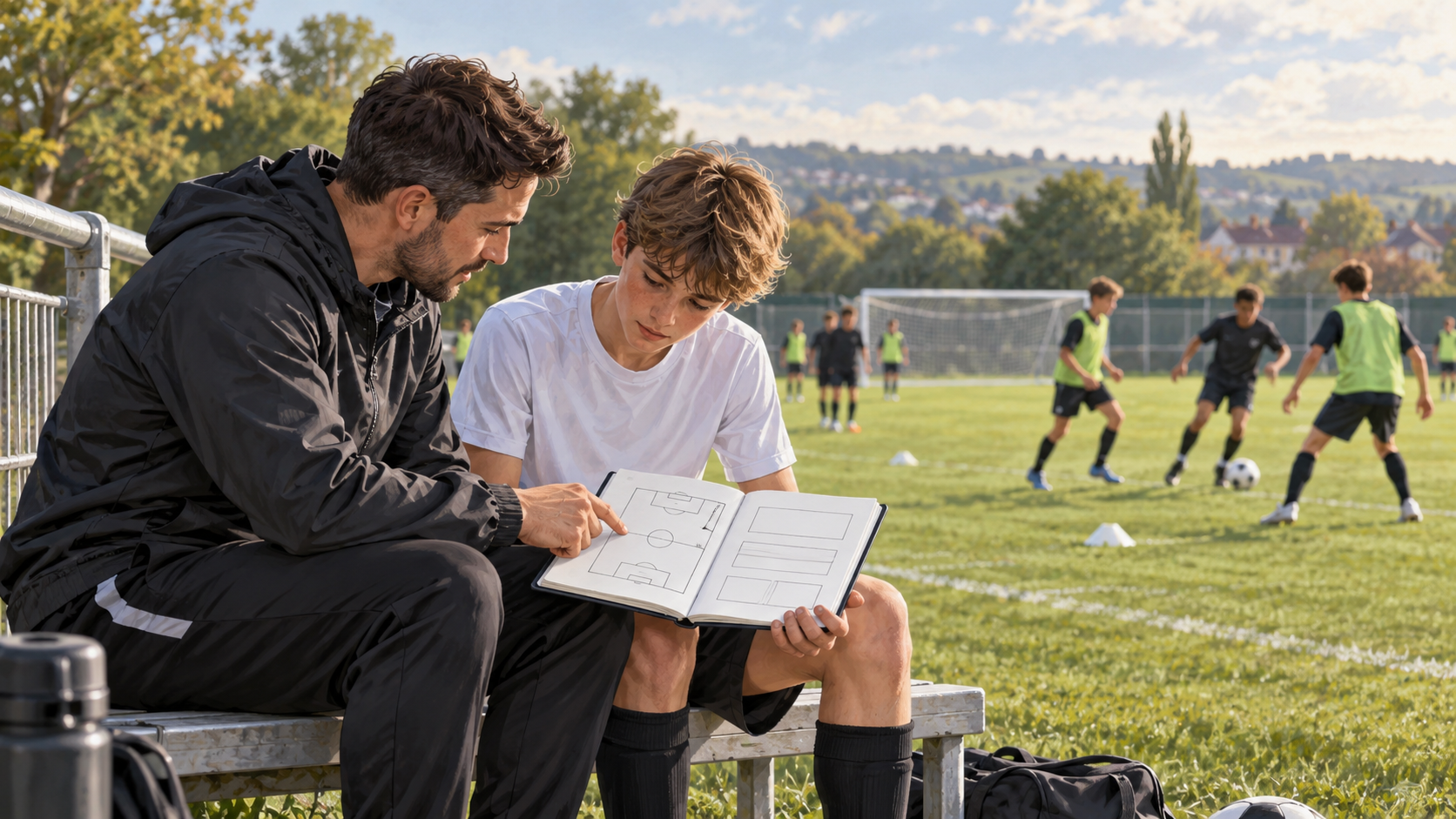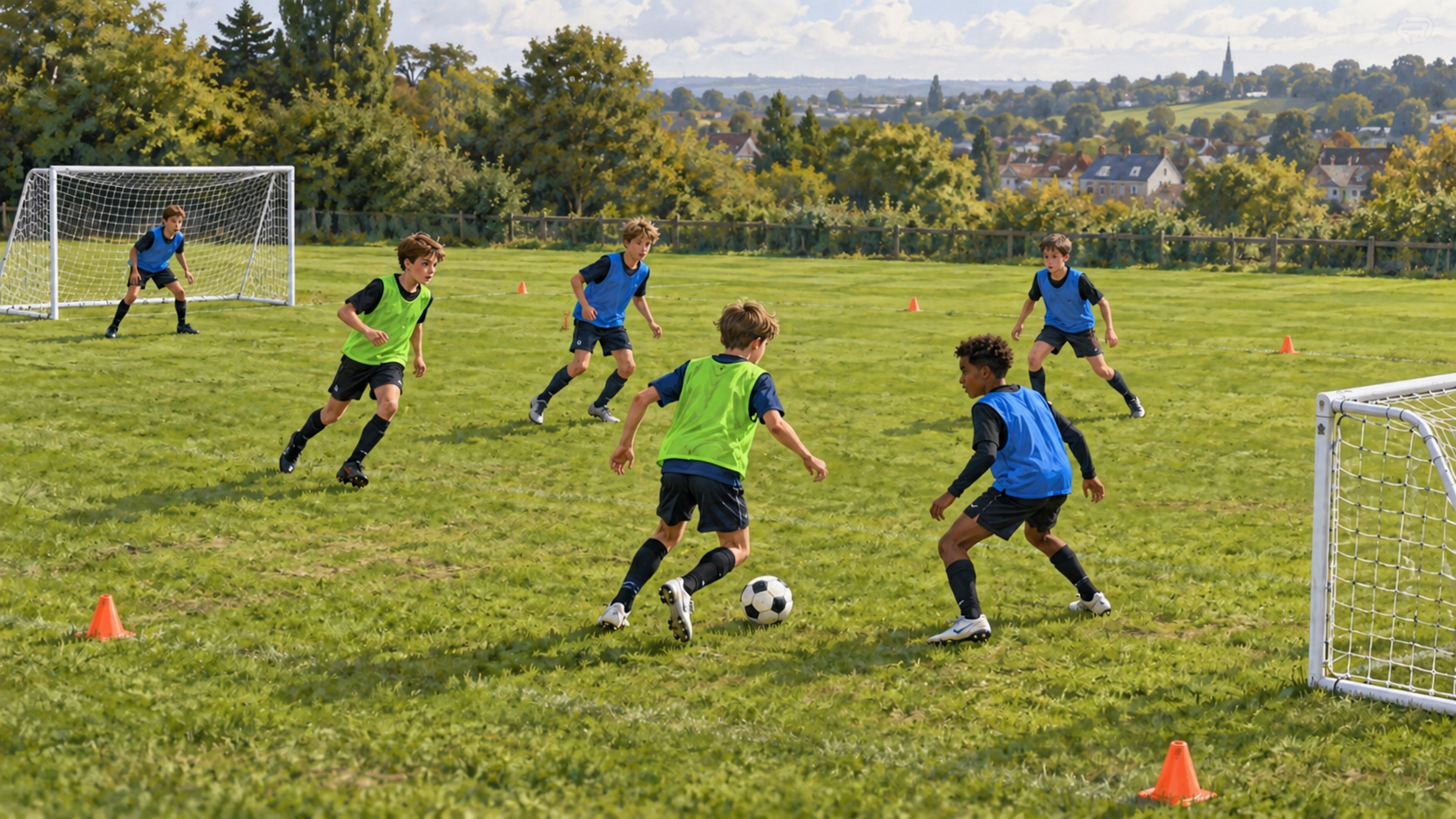
From training to matchday: give young players ownership
Connect training to competitive performance through a clear learning focus, manageable player choices, calm touchline support and a review that improves the next session.
A place for slower thoughts
Youth football coaching, practice design and player development, with practical ideas for helping young players think, learn and perform.
Words by Geraint Twose
Connect training to competitive performance through a clear learning focus, manageable player choices, calm touchline support and a review that improves the next session.
Turn a review document into a clear player challenge, a coaching commitment and a useful conversation that travels with the youngster into their next development phase.
Belonging and challenge work together when coaches notice who participates, listen to individuals, adapt learning opportunities and hold adults to clear standards.
A fair youth-football assessment separates current performance from future potential, using varied observations and careful review rather than labels based on size.
Choose when to observe, explain or ask a question, then check the next action. Better interventions begin with a clear understanding of what a player needs.
A practical approach to game design: choose a football problem, observe what the rules create, and adjust the challenge without scripting every action.
Turn a club ambition into decisions children can recognise, practise and review, with a clear connection between coaching language and matchday behaviour.